Welcome to our Psychopedagogy blog. This space is dedicated to exploring the complexities of learning disabilities, breaking down their characteristics, and providing educators and families with actionable, evidence-based support strategies to foster truly inclusive classrooms.
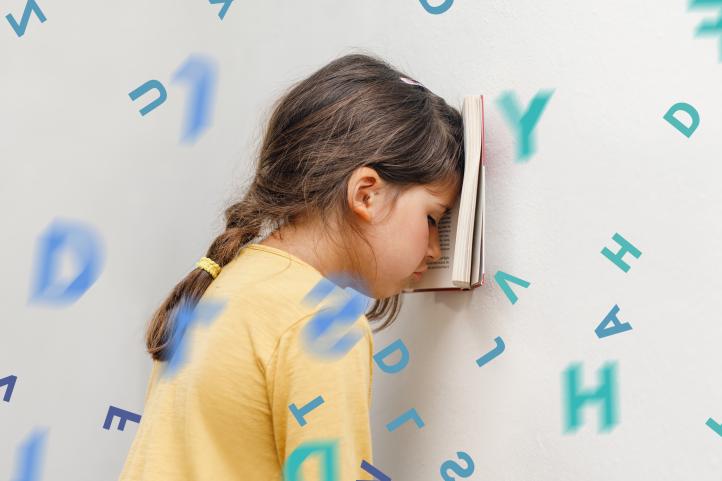
A student has difficulty reading words accurately and fluently. They may mix up letters or words while reading. They understand stories well when listening but struggle to read aloud.
Support strategies:
-For Teachers:
Teachers can use multisensory phonics activities (seeing, hearing, and tracing letters).
-For Families:
Families can read along with audiobooks while following the text in a book.
Dyscalculia
Example:
A student struggles with basic math facts and number concepts. They may confuse math symbols and have difficulty telling time.
Support strategies:
For Teachers:
Teachers can use visual and hands-on materials such as blocks, counters, or fraction tiles.
For Families
Families can practice math through daily activities like cooking, counting objects, and board games.
Dysgraphia
Example:
In class a student is asked to write a letter to Santa, however the student writes letters backward or forms them inconsistently, making it hard for the teacher to understand.
Support Strategies:
-For Teachers:
The teacher can provide to all her students papers with raised lines to give physical cues for students to stay within margins and form letters more accurately.
-For Families
At home, parents can practice tracing letters of the alphabet with their children to model correct letter formation.
Dyspraxia
Example:
During an art activity a student struggles to cut basic figures, producing jagged edges and not following the outlines.
Support strategies:
-For Teachers:
Teachers can help the student by promoting cutting skills step by step in the classroom, starting with simple shapes such as straight lines or squares, and gradually moving on to more difficult shapes.
-For Families
Parents can practice cutting exercises at home and give hand-over-hand guidance for their child to improve scissor skills.
Dysphasia/Aphasia:
Example:
In reading class, a student wants to explain what happened in a story during a class discussion. However, he struggles to find the right words and keep the flow of speech.
Support strategies:
-For Teachers:
At school, the teacher can ask guiding and concise questions to the class to help the student remember details from the story.
-For Families
At home, parents can read stories with their kids and discuss the characters, events, and main ideas with the use of pictures as support.
Auditory and Visual Processing Disorder
Example:
A student has difficulty reading from the board and copying instructions. He usually skips letters or even complete words.
Support strategies:
-For Teachers At school the teacher can present information in a vivid, simple, and brief way to make copying easier and more accurate.
-For Families At home, parents can help their child use a finger or a ruler as a reading guide to help them keep their place while reading.
ADHD
Example:
A student struggles on concentrating on tasks that are too long, which causes him to not understand or complete his task in the best way.
Support strategies:
-For Teachers
Teachers could give students small tasks and gradually give them longer ones.
-For Families
Parents should support their child with their long tasks, so in that way the kid will do them by himself eventually.
Autism
Example:
A student has struggles changing from subjects and activities. The student becomes upset, anxious, or has difficulty focusing.
Support strategies:
-For Teachers
The teacher can give reminders to her students when there are five minutes left before the next class or activity begins.
-For Families
At home parents can try to keep routines as consistent as possible
Comparison Chart
Video Resources for Understanding Learning Disabilities
Image Gallery
Preschool students practice math using manipulatives at a public school in Boston in 2016. Experts say all students, not only those with dyscalculia, could benefit from using manipulatives to help visualize problems and graph paper to assist in lining up numbers. (Lillian Mongeau/The Hechinger Report via AP)
Same difference: The brain structure variations that track with social difficulties are similar in autism (left) and attention deficit hyperactivity disorder (right).
People with autism show lower brain activity in specific regions as compared to control subjects. Image courtesy of Brandon A. Zielinski, MD, PhD
Example of Handwriting Difficulties Dysgraphia.
Curiosities About Learning Disabilities
🔹 Learning disabilities do not affect intelligence.
Most students with learning disabilities have average or above-average intelligence.
🔹 They are very common.
About 5–15% of school-age children worldwide have a specific learning disability.
🔹 Dyslexia is the most common learning disability.
It affects reading, spelling, and word recognition skills.
🔹 Many successful people have learning disabilities.
For example, Albert Einstein, Whoopi Goldberg, and Richard Branson have spoken about learning challenges.
🔹 Learning disabilities often occur together with ADHD.
Many students with learning disabilities also experience difficulties with attention, focus, and organization.
🔹 Early support makes a big difference.
Research shows that identifying and supporting learning disabilities early can improve academic success and self-confidence.
🔹 Learning disabilities are lifelong.
They do not disappear, but with appropriate strategies and accommodations, individuals can be highly successful in school and work.
🔹 Every person is different.
Two students with the same learning disability may have very different strengths, challenges, and learning needs.
Interactive Activities
This interactive activity is designed to help children integrate selfcare concepts and household organization habits through object-sorting exercises based on association.
This activity trains visual skills to make estimations by comparing images that express different concepts or values (shapes, colors, sizes, quantities, etc.).
Final Reflections
Carla's Reflection
Understanding learning disabilities is important because it helps us see that every student learns in different ways and that difficulties in school are not a sign of low intelligence. Teachers play a key role in inclusive education by adapting their teaching methods and creating a supportive classroom where all students can succeed. This knowledge also helps promote fairness in education because it ensures that students with different learning needs receive the support and opportunities they need to reach their full potential.
Sara's Reflection
When I think about learning disabilities, I realize how important it is to see beyond labels and focus on the person. Understanding them matters because it reminds us that intelligence comes in many forms, and every student deserves the chance to shine in their own way. Teachers are not just instructors in inclusive education, they are bridges, guiding students toward confidence and belonging by adjusting lessons and showing patience. For me, this knowledge feels powerful because it’s about fairness: making sure no one is excluded from opportunities simply because they learn differently. It’s a reminder that education should be about opening doors, not closing them.
Lizenky’s Reflection
I consider that knowing about learning disabilities is essential to build empathy and consideration toward individuals who have these challenges. It is also important to be conscious of it to let learners know they are not discriminated against, but rather included and capable of strengthening their abilities. Moreover, by understanding these conditions, it becomes easier to find effective strategies and methods to encourage their journey in education. I think that teachers must be conscious that these students are an active part of the classroom, requiring patience and targeted support to succeed. The teachers' role is also to include these learners in every activity while providing the necessary supervision, guidance, and motivation to make them feel valued. Finally, through this knowledge, educators foster equitable educational opportunities as it allows them to understand students behavior and recognize learning patterns instead of judging or punishing the pupil, ensuring every student has the tools to succeed in learning.
Lauren's Reflection
As future teachers, understanding learning disabilities is essential for recognizing their signs and symptoms and, subsequently, for helping and supporting our future students. As we have studied, all students learn in different ways, and our role as teachers is to make sure that every single one of them, including those with learning disabilities, learns at the same level by using appropriate techniques.This will definitely create a comfortable and safe learning environment for all students and encourage inclusive education. Moreover, acquiring knowledge about learning disabilities promotes equitable educational opportunities since we are aware of each student's needs, and we will adapt our teaching to different learning styles effectively.
Julio’s Reflection
Throughout this process I've realized that learning disabilities are not something that make
students unable to learn or grow, students can truly grow despite having a disability, but for this
to be possible it is important for teachers learn to understand and recognize signs that could
indicate the existence of a disability, with an early diagnosis and proper management, students
can definitely make the most out of their learning process. In a classroom teachers meet a
certain number of students, each one different in many ways, some of them with a learning
disability, and so the teacher ought to become that someone that these students can rely on,
that gives them the chance to develop academically and personally, a teacher has to make
these students feel included, not to label them, as this will mark them forever, we have to
remember they are different not less capable. With this knowledge, we can create an
environment where everyone has the same opportunities, as we understand that students with
disabilities are just as capable as everyone else, we can guide them toward success and have a
classroom where everyone is equally important, but all this will only happen if we understand
disabilities. With this project, we are indeed taking a step forward toward a more equal
educational system that hopefully will give opportunities to everyone.
Breidy’s Reflection
After learning about these disabilities, I realized that students with learning disabilities face challenges that many people do not notice. A student may have difficulty writing letters correctly, reading words, speaking during a discussion, paying attention, or solving math problems. Because of this, it is important not to judge students only by their performance in class. Sometimes students may have great ideas and abilities, but they face obstacles that make learning more difficult. If teachers understand these challenges, they can help students feel more confident and motivated instead of frustrated. Teachers have a key role in inclusive education by supporting students, being patient, and changing their teaching methods when needed. This knowledge helps create fair education because it gives every student the support they need to learn, participate, and succeed.
Learning Disabilities Association of Prince Edward Island. (n.d.). What are learning disabilities?https://ldapei.ca/what-are-lds/
Southern Oregon University Professional Learning Committee. (2016). How humans best learn (Professional Learning Committee Topic 2 Report). Southern Oregon University.
Types of learning disorders and their signs. (2026, June 3). In HelpGuide. https://www.helpguide.org/family/learning-disabilities/learning-disabilities-and-disorders


Comentarios
Publicar un comentario